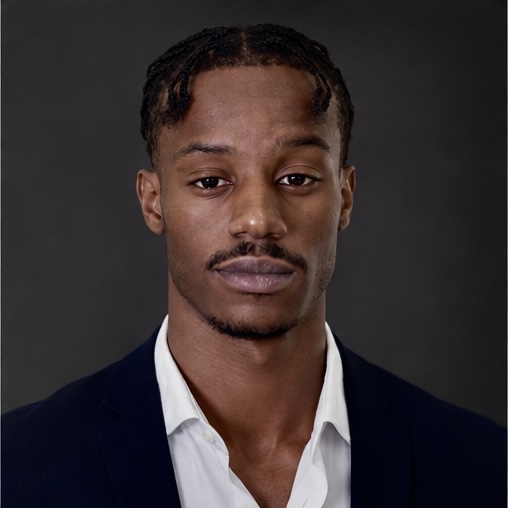
Six years building digital presence and community — three of them running communications for one of New Jersey's largest cities.
In brief
I run digital communications for public institutions — strategy, content, and crisis response for audiences in the hundreds of thousands. Before government, I built the same instincts in luxury retail, music, and e-commerce.
Four things I've built or turned around — each one paired with the skills that did the work.
Audience growth
Doubled the city's Instagram audience
Architected a unified strategy across Instagram, Facebook, X, and TikTok — one voice, one calendar, and content built to how each platform actually distributes.
Social Media StrategyContent StrategyPlatform AlgorithmsA/B TestingAnalytics
30K → 60KInstagram followers
51K → 61KFacebook followers
100K+Avg. impressions per post
Digital infrastructure
Rebuilt Newark's website
Spearheaded the official redesign, rebuilding the information architecture around what residents come to do rather than the city's org chart — then migrated every page to it.
Pre-approved templates and an escalation chain agreed with the Mayor's office, police, and fire ahead of time — so an incident at 2 AM starts at step four, not step one.
Digital storytelling for the Mayor's flagship homelessness strategy, built on named residents and real placements rather than aggregate statistics — every story carrying a concrete next step.
Campaign ManagementCommunity EngagementPublic AffairsBrand Development
CitywideAwareness driven
↑Service enrollment
RealHousing placements amplified
Profile
About
Digital Communications Manager with over six years in content creation and community building, and three years shaping public-sector communications for New Jersey's largest municipalities.
As Social Media Manager for the City of Newark, I scaled Instagram from 30,000 to over 60,000 followers and Facebook from 51,000 to 61,000, with posts averaging 100,000 impressions. I led the complete redesign of Newark's official website — migrating 300+ pages across six departments into a modern digital hub.
When crises hit, I built the city's rapid-response playbook from scratch, deploying emergency messaging within minutes to keep 300,000+ residents informed and safe.
My approach blends data-driven strategy with creative production. Before government, I built a foundation in visual storytelling across luxury retail, music marketing, and e-commerce, developing platform-specific creative strategies for audience growth.
I'm passionate about leveraging AI, machine learning, and emerging technologies to drive digital innovation in the public and social impact space — and I'm currently building projects at that intersection.
Career
Experience
Each role broken into what it actually was, what I did, and what changed as a result.
Social Media Manager
City of Newark · Mayor's Office of Communications
Jul 2022 – Sep 2025Newark, NJ
2Person team led
4Platforms owned
6Departments served
300K+Residents reached
The mandate
Own the public voice of one of New Jersey's largest cities — across routine service information, the Mayor's policy priorities, and emergencies — with a two-person team and no existing playbook for any of it.
What I did
Architected a unified strategy across Instagram, Facebook, X, and TikTok, with one voice and one calendar instead of four disconnected feeds.
Managed a two-person team covering social, press, and digital news; set brand voice standards and analytics reporting that fed executive decisions.
Spearheaded the official website redesign, rebuilding the information architecture around resident tasks rather than the city's org chart.
Owned digital storytelling for "The Path Home," the Mayor's flagship homelessness strategy.
Built the crisis playbook: pre-approved templates and an escalation chain agreed with police, fire, and the Mayor's office before incidents, not during.
What changed
Instagram 30K → 60K and Facebook 51K → 61K, with posts averaging 100,000 impressions.
300+ pages across six departments migrated into a new site, launched 2024.
Emergency messaging inside 30 minutes, unified across every channel, for 300,000+ residents.
Six departments publishing to one standard for the first time.
Social Media StrategyCrisis CommunicationsWebsite StrategyExecutive CommunicationsTeam LeadershipAnalytics
Digital Media Manager Concurrent
Dept. of Recreation, Cultural Affairs & Senior Services · Newark Office of Film & Television
Sep 2025 – Dec 2025Newark, NJ
2Departments at once
30+Annual programs
1,000+Concert attendance
100%Senior capacity filled
The mandate
Run digital for two departments simultaneously, serving audiences with almost nothing in common — festival crowds and senior program registrants — and launch a brand-new office's public presence from zero.
What I did
Segmented the calendar by audience and built distinct treatments for events versus senior services.
Ran campaigns timed to registration windows rather than posting on a flat schedule.
Launched NOFTV's channels from nothing, positioning Newark as a production destination rather than a permit office.
Made film-permit routes legible and actionable for producers and location scouts.
What changed
Summer concert attendance past 1,000.
Senior program capacity filled to 100%.
A working NOFTV presence built from zero, with permit inquiries up off the back of it.
Produced photography for luxury jewelry collections — the detail and lighting control high-value pieces demand — building scalable visual assets for e-commerce and social with consistent treatment across the catalogue.
PhotographyLightingArt DirectionAdobe Suite
Photographer & Social Media Assistant
Sloppy Vinyl Music Group
Jun 2020 – Nov 2021Clifton, NJ
Shot music merchandise and events, and collaborated on localised social campaigns — SEO-driven captions and platform-specific formatting to lift engagement and follower retention.
PhotographySEOSocial CampaignsCopywriting
Photographer
TheRealReal
Jun 2020 – Nov 2021Woodbridge, NJ
Consignment photography against a fast-moving, high-variety catalogue — the production problem of keeping hundreds of unlike items looking like one coherent storefront.
PhotographyE-commerceVolume Production
Skills
Core competencies
Communications & strategy
Digital CommunicationsPublic AffairsExecutive CommunicationsCrisis CommunicationsCommunity EngagementContent StrategyWebsite StrategySocial Media StrategyBrand DevelopmentCampaign ManagementPublic InformationAnalytics & ReportingCross-Functional Leadership
Everything in one place — in development, in research, and queued. Filter by status or category; pick several and anything matching all of them comes first.
⌕
Status
Type
No projects match those filters.
Store
Shop
⌕
Nothing matches those filters.
Blog
Notes & essays
On digital communications, civic technology, AI, and building at the intersection of technology and public impact.
⌕
Topic
No posts match those filters.
AI & the future of public communications
Essay · June 2025 · 5 min read
AI & the future of public communications
Municipal comms teams are running crisis response for hundreds of thousands of people with a staff you could fit in a sedan. The question isn't whether to automate — it's what we owe people when we do.
Over the past three years working in government communications, I've seen firsthand how the gap between public expectation and government responsiveness keeps widening. Residents expect the same immediacy from their city that they get from their favorite apps. AI might be the bridge.
The problem
Municipal communications teams are typically understaffed and under-resourced. In Newark, we managed social media across four platforms, a website with 300+ pages, crisis communications for 300,000+ residents, and proactive campaign storytelling — with a two-person team.1
The math doesn't work without automation.
When a water main breaks at 2 AM, someone has to draft the alert, get it approved by the Mayor's office, coordinate with police and fire, and push it across every channel — ideally within 30 minutes. That isn't sustainable at scale without intelligent tooling.
Emergency alert sequence
A weather emergency sequence — the same message, shaped for four platforms, pushed inside the 30-minute window.
Where AI fits
Automated crisis response. AI can monitor incoming streams — weather alerts, 311 requests, social mentions — and auto-draft preliminary alerts that a human reviewer approves and pushes in seconds instead of minutes. The shape of it is deliberately boring:
The key is the third line. A human approves every message that reaches a resident — the model saves the twenty minutes of drafting, not the judgment.
Predictive community engagement. Models can analyze historical engagement to predict which messages resonate with which demographics, at what times, on which platforms. This isn't about manipulation — it's about making sure critical information actually reaches the people who need it.
Accessibility automation. AI-powered translation, captioning, and alt-text generation can make municipal communications accessible to non-English speakers and people with disabilities at a fraction of the current cost and time.2
The guardrails
What I'd insist on before deploying any of this
Transparency about what was machine-drafted. An audit trail on every published message. And equity testing before launch, not after — because the failure mode isn't a typo, it's a neighborhood that stops getting told things.
Any AI deployment in government must be transparent, auditable, and designed with equity at the center. The risk isn't just inaccuracy — it's amplifying existing biases in which communities receive information and which get left behind. I'm building with these principles as the foundation, not an afterthought.
The future of public communications isn't AI replacing humans. It's AI giving humans the capacity to do what they do best.
Make judgment calls. Build trust. Serve their communities.
1. Two people, including me, for the full period described. Headcount did not change.
2. Newark's resident population includes substantial Spanish- and Portuguese-speaking communities; translation was a standing need, not an edge case.
Contact & resources
Get in touch
Everything in one place — the resume, the work, the writing, and the fastest way to reach me.
Resources
↓Resume
Full resume, ATS-friendly
Single-column PDF that parses cleanly through applicant tracking systems — six years of digital communications, three of them in government.
The Newark website rebuild, The Path Home, the crisis playbook, the NOFTV launch, recreation programming, and commercial photography — each with the challenge, what I did, and what changed.
✎Published work
Writing on comms, AI, and civic tech
Essays from the front lines of government digital communications — starting with the case for AI as capacity rather than replacement, and the guardrails it demands.
⚙Projects
What I'm building now
Sixteen projects across media software, AI, data analytics, retail, and information distribution — in development, in research, and queued.
Collaboration, an opportunity, or just a conversation — whichever it is, this reaches me.
The short version
I spent three years as the public voice of one of New Jersey's largest cities — growing its audience, rebuilding its website, and building the system that got emergency information to 300,000 residents inside thirty minutes. Before that I built the same instincts shooting for luxury retail and music.
Now I'm building at the intersection of communications and technology, and looking for work where both matter. If that sounds like your team, the fastest way to find out is to write.
Price?Release?Platforms?Who made this?Multiplayer?